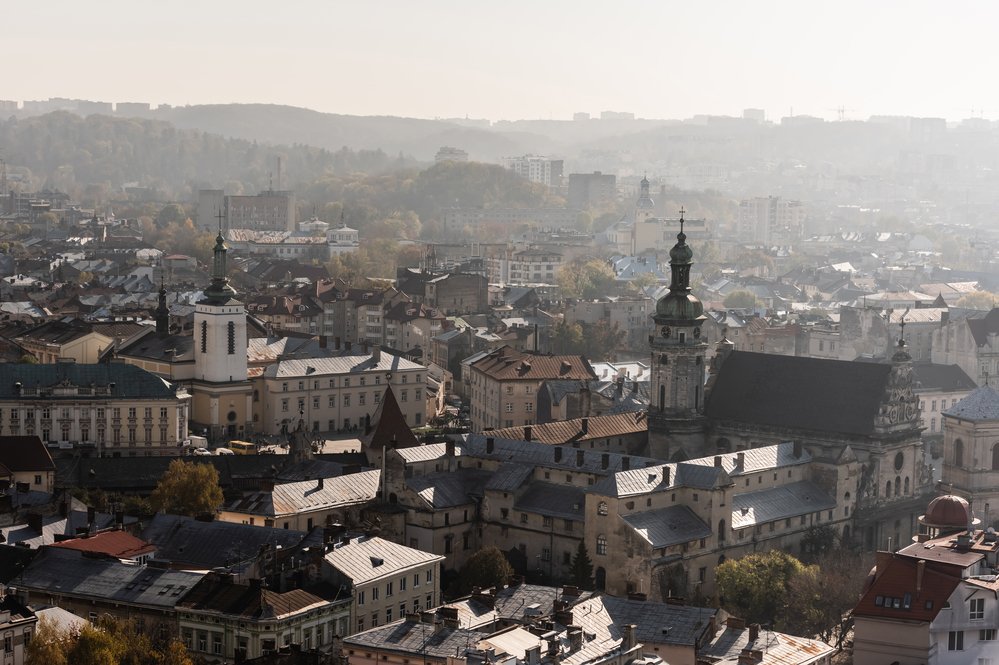
RLTV Podcast: Martin Surridge on Swiss Minarets and the French Burqa Ban
Martin Surridge, the new associate editor of ReligiousLiberty.TV and Michael Peabody discuss recent developments in Europe.
RLTV Podcast: Martin Surridge on Swiss Minarets and the French Burqa Ban [7:42m]: Play Now | Play in Popup | DownloadReligious Tension Leads to Clashes in Jerusalem (From Al Jazeera English)
Conference to Relaunch ‘Sunday Protection’ at European Level to be Held (COMECE)
At RLTV we have been watching developments of this issue for over a year. A coalition of churches and labor unions is again working toward the goal of a European Sunday rest law. Editor
EXCERPT:
A Conference to relaunch the debate on Sunday protection at European level will be held on 24 March in the European Parliament in Brussels. It is organised by the MEPs Thomas Mann (EPP, Germany) and Patrizia Toia (S&D, Italy) together with the Konrad-Adenauer Foundation. Several European trade unions, civil society organisations and Churches support the conference. László Andor, the new EU Commissioner for Employment and Social Affairs will take the floor, as well as numerous experts and MEPs.
The European Commission will soon be presenting a new draft of the “Working Time Directive”. In its initial 1993 version the Directive stipulated that Sunday should be « in principle » the weekly day of rest for European workers. This reference had been withdrawn in 1996 by the European Court of Justice, on the grounds that the European legislator had not given sufficient reasons as to a link between a work-free Sunday and the protection of workers’ health.
Meanwhile, recent studies[1] have demonstrated the existence of a strong link between workers’ health and a work-free Sunday. Furthermore, a common weekly rest day for the whole of society allows families to spend time with each other, and all citizens to engage in cultural, spiritual and social activities. Sunday moreover strengthens the social cohesion of our societies, which has been undermined by the current economic crisis. It therefore represents a precious achievement, which should be recognised as a pillar of the European Social Model.
Read more, including the programme, at http://www.comece.org/content/site/en/press/pressreleases/newsletter.content/1185.html
Tension over Religious Sites Leaves Dozens Hurt in Jerusalem Clashes
EXCERPT from BBC News (link below):
Palestinians and Israeli police have clashed near the Jerusalem compound housing the al-Aqsa mosque, leaving dozens of people injured. A large group of Palestinians left Friday prayers and began marching to the mosque, carrying banners and waving green flags, witnesses and police said. Police tried to disperse the crowd – some of whom were throwing stones – using stun grenades and tear gas. It is the latest in a series of clashes amid tensions over religious sites.
The Jerusalem complex is known to Muslims as Haram al-Sharif and to Jews as Temple Mount, and has long been contested. The recent violence has been triggered by Israel’s decision to add two shrines in the occupied West Bank to its list of national heritage sites.
http://news.bbc.co.uk/2/hi/middle_east/8552569.stm
The Winter Olympics and Inequality in Global Athletics
In high school, the only sports I played to any significant extent were soccer and basketball. A lot of my friends went snowboarding or skiing, but it was a long drive to the mountains and I could not really afford all the equipment, which cost hundreds of dollars. So I never spent much time on the slopes. However, I have always been fascinated by winter sports. The Winter Olympics in Vancouver was the first of two major international sporting events this year, the other being the soccer World Cup, to be held in South Africa in June. Both events feature the best athletes in the world in their respective sports and enthrall millions across the globe.
However, after watching the Germans steer their bobsleds, the Russians twist and turn in figure skating, and the French ski down steep mountain slopes, I began to realize that the true reason that many athletes from cold-weather countries succeed in this frosty quadrennial competition is not climate or topography or even, dare I say it, talent, but rather privilege, economics, and wealth. Of all the stunning statistics that were tossed around during the fortnight of games in British Columbia, one stat was not mentioned, although its omission is hardly surprising. Of the 238 total medals that were up for grab in Vancouver, over 50 percent were won by eight of the world’s wealthiest nations. The United States, Canada, Great Britain, Japan, Russia, France, Germany, and Italy—industrialized market economies, who together make up the world’s main economic council of wealthy nations, the exclusive Group of Eight, or G8—took home 130 medals and nearly half of the first-place finishes. In addition to the success of the G8 nations, China, widely considered the second wealthiest nation in the world after the U.S., and South Korea, another powerhouse economy in Asia, took home just under 10 percent of remaining medals. It is also worth mentioning that Norway, which the International Monetary Fund places three positions higher than the United States in GDP at purchasing power parity per capita, and Switzerland, which also ranks in the top ten and is just one place behind the U.S., brought home approximately 9 percent and 3 percent of the Winter Olympics medals respectively. If you are doing the math, that means that 72 percent, nearly three-fourths, of all the medals in Vancouver were won by twelve incredibly wealthy nations. While similar patterns were displayed in Beijing and other summer Olympic games, one must remember that the Beijing 2008 Summer Olympics were a competition where poorer nations like Ethiopia, Romania, Jamaica, Kenya, and Ukraine walked away with a half-dozen gold medals each. With the exception of Austria, hardly a nation of impoverished citizens, and Yugoslavia, the Winter Olympics has never been held outside of these twelve countries since the competition began nearly ninety years ago.
The lack of success among underdeveloped nations in the Winter Olympics is not for want of trying. Take, for instance, the story of Tugba Karademir, the young figure skater from Turkey, where the capital city Ankara has the country’s only real ice rink. Karademir’s father and mother, who is a certified aerospace engineer, immigrated to Canada and accepted jobs doing menial labor just so their daughter could have a chance to compete in the Olympic Games. While geography could be considered a significant challenge to athletes wanting to ski in the Pacific islands or snowboard in the heart of Africa, a large number of events occur indoors or on manmade ramps and tracks, and more often than not, poorer countries do not compete because they lack the finances to compete in sports that require such a large amount of equipment. Is it surprising that most kids in Brazil have never played ice hockey but are always seen with a soccer ball at their feet? Or that children in Cuba play baseball with a simple wooden bat instead of curling? Or that the best skiers in your dorm usually come from the most privileged families? Understand that I am not insinuating that there is a vast conspiracy in winter sports against poorer nations, but that among all of the athletic competitions in the world, it is the most inherently unequal. While I enjoyed watching ice hockey and the rest of the winter games, as a liberal and a lover of equality, they pale in comparison to the World Cup, where 32 nations from across the globe compete on a much more equal playing field in a truly international competition, where success is determined not by how much equipment you or your country can afford, but by your skill kicking a ball on a field of grass.
Martin Surridge is the associate editor of Religious Liberty TV and a freelance journalist who writes for the Walla Walla Union-Bulletin. He is currently working on his M.A. in Teaching at Walla Walla University.
Martin Surridge
History 395
Reading Report #9
3/3/2010
Tony Walters, “Why Students Think There Are Two Kinds of American History.” The History Teacher 39 (Nov 2005), 11-121.
UN condemns Gaddafi jihad call
EXCERPT from Al Jazeera English (link below):
The United Nations and European Union have condemned a call from Libya’s leader for Muslims to carry out jihad against Switzerland over a recent vote to ban the construction of minarets in the European country.
Gaddafi said: “Any Muslim around the world who has dealings with Switzerland is an infidel [and is] against Islam, against Mohammed, against God, against the Quran.”
“Let us fight against Switzerland, Zionism and foreign aggression,” he said in a speech broadcast live on television.
Sergei Ordzhonikidze, the UN director-general in Geneva, said the call by Muammar Gaddafi on Friday was “inadmissible”.
Read the full article at http://english.aljazeera.net/news/africa/2010/02/2010226124744420153.html
Obama speaks up for Tibetans, but in a hushed voice (India Times)
EXCERPT:
WASHINGTON: President Barack Obama met with the Dalai Lama to express his “strong support” for human rights and religious freedom for the people
of Tibet while encouraging a direct dialogue with China.
Mr Obama “commended the Dalai Lama’s ‘Middle Way’ approach, his commitment to non-violence and his pursuit of dialogue with the Chinesegovernment during an hour-long meeting in the Map Room in the residential wing of the White House,” said White House press secretary Robert Gibbs.
God’s Counterterrorism in a ‘24′ World
God’s Counterterrorism in a ‘24′ World from Ryan Bell on Vimeo.
Ryan Bell, the pastor Hollywood Seventh-day Adventist Church, gave this presentation at La Sierra University on January 28, 2010.
RLTV PODCAST: Monte Sahlin on How to Help Haiti
Monte Sahlin is the director of Research and Development of the Ohio Conference of Seventh-day Adventists and is an expert international humanitarian aid. In this podcast he discusses the Haiti Earthquake and the response of a church group from Idaho that tried to help but got in trouble. He discussed Haiti and other current issues on his blog at http://www.MonteSahlin.com.
BUMPER MUSIC: “Haitian Vacation” – from The Alan Craig Project. Podsafe music from MusicAlley.com.
The European Attack on Religious Liberty
By Martin Surridge -
As the nation of Haiti continues to suffer through one of the worst natural disasters in recent years, and the chaos and desperation that followed the earthquake, an incredible amount of material and financial relief has flooded into the former French colony. While Haiti may seem like another world for many people, what many do not realize is that Haiti lies only 681 miles off the coast of Miami, and that many American cities have substantial populations of Haitian-Americans. In addition, the United States government estimated that several thousand Americans were likely killed in the earthquake. Haiti, it turns out, is not as far away as we had previously thought. Sadly, the fact of the matter is that concerned citizens and other individuals tend to pay a little closer to attention to a global problem when the effects can be keenly felt in their own homes.
While they have been easy to miss, the news has been peppered recently with stories of serious threats to religious liberty not in the developing world, war-torn regions in the Middle East, or third-world countries struck by natural disasters, but in Europe, our own geopolitical backyard. In the modern era, Europe has been a beacon for personal liberty and religious tolerance, with religion playing a seemingly minor role in most of the continent’s wars and conflicts. However, one does not need an advanced degree in history to know that Europe has also been a bastion of religious persecution, a trait that has reared its ugly head in recent weeks, mostly as the continent struggles to define itself against growing waves of Muslim immigrants.
Radical, or at least conservative, Islam was seen as the enemy in the legislative decision made in Switzerland recently, when the Alpine nation banned the construction of minarets on Muslim places of worship. Not only is Switzerland a famously tolerant nation, it is also a nation with a grand total of four such minarets. The campaign that advocated for the ban preyed on people’s fears of Islamic terrorism and resorted to despicable tactics, including a poster that featured minarets rising skyward like nuclear missiles.
Perhaps less surprising that the minaret ban in Switzerland, but just as concerning, was a recent incident on the Greek isle of Crete when the only synagogue on the island was attacked by arsonists twice last month, which destroyed thousands of books, two offices and part of the historic building’s roof. Anti-Semitism is hardly new in Greece, but neither is the peaceful coexistence of Jewish and Christian communities in a country where some Jewish congregations can trace back their roots hundreds of years.
Religious liberty is also under threat in France, where parliament is expected to enact a law that will require dozens of conservative Muslim women to cease wearing the controversial burqa, the face-covering full length veils. Arguments abound on both sides of the debate. Those opposed to the veil argue that it degrades women, is an affront to gender equality, insinuates that men are incapable of controlling their lust, and is a threat to public security. Those who contend that such a law would infringe upon freedom of speech and religion claim that it unfairly targets Islam and have pointed to the fact that conservative nuns expose little more than their hands and face in their own full length dresses with similar head scarves. Regardless of political affiliation or personal opinions on the burqa, it is hard to deny that if such a law were passed it would amount to government interference in religion.
If this pattern of religious liberty infringements were anything to go by, the United States may not be far behind. Connections between North America and Europe run deep and while there may be several key differences between the two continents, religious intolerance seems to be an emerging, unifying theme. These incidents display a disturbing trend that scholars of religion and sufferers of anti-Semitism have known for a long time: laws prohibiting the free practice of religion are just the first in a series of slippery steps toward widespread intolerance and institutionalized discrimination. It is time that the Europe, and the other nations of the west, show the developing world that religious liberty is not optional, but rather a fundamental and guaranteed principle of our society.