Texas education board rejects in-depth study of First Amendment (DallasNews.com)

EXCERPT:

AUSTIN – Republicans on the State Board of Education soundly rejected a Democratic-backed proposal Thursday that would have required Texas students to be taught the reasons behind the prohibition of a state religion in the Bill of Rights.

The contentious decision in curriculum standards for U.S. government classes appeared to signal the unhappiness of several board members with court rulings that have affirmed the separation of church and state – including a longtime ban on school-sponsored prayer.

Read the full article at: http://www.dallasnews.com/sharedcontent/dws/dn/education/stories/031210dnmetsboe.19ab856dd.html

Faith Healing Couple Guilty of Murder

EXCERPT from ABC News (link below):

An Oregon husband and wife who relied on faith rather than medicine to treat their dying child were convicted today of criminally negligent homicide. Jeffrey and Marci Beagley of Oregon City said they thought their 16-year-old son, Neil, merely had the flu when they prayed and laid hands on him during the summer of 2008. Neil actually suffered from a urinary tract blockage, and, on June 17 of that year, he died of kidney failure — without seeing a doctor.

The jury’s vote to convict was not unanimous, with two of the 12 voting against it, but Oregon allows non-unanimous verdicts in some cases. The case is the latest to test the line between the freedom to believe in prayer’s healing powers and the duty of parents to seek medical care when their children’s lives are on the line.

http://abcnews.go.com/WN/faith-healing-couple-convicted-homicide/story?id=9721812

Oregon Legislature Ends Ban on Teachers Wearing Religious Dress – Goes to Governor for Signature

EXCERPT from OregonLive.com (link below):

Oregon’s longstanding ban on teachers wearing head scarves or other religious dress is near its demise after the Senate and House gave final approval Tuesday to lift the ban.

Champions in the Senate called ending the ban a historic step toward religious freedom and non-discrimination in a state that has performed poorly in those arenas in the past. Christian teachers have long been allowed to wear crosses in Oregon public schools, but head scarves and turbans are not permitted.

Read the full article at http://www.oregonlive.com/politics/index.ssf/2010/02/oregon_legislature_repeals_ban.html

Washington House of Representatives Attempts to Facilitate Union Take-Over of Religious Child Care Centers

By Michael D. Peabody, Esq.

So what’s the biggest threat to religious liberty? According to J. Brent Walker, executive director of the Baptist Joint Committee for Religious Liberty, the answer is found in the strings attached to government funding of religious activity.  Earlier this month, during a speech for the Jewish Anti-Defamation League, Walker said, “What the government funds, it always regulates. Government-sponsored religion is always bad for religion. How can we raise a prophetic fist with one hand and take government money with the other?”

The truth of Walker’s statement was underscored just last week when the Washington State House of Representatives passed HB 1329, now working its way through the state Senate, that cleared the way for unionization of private and most non-profit child care centers if they take government subsidies for as little as one child, and even declares the centers’ employees “government employees” for the purposes of unionization.

In fact, HB 1329 openly declares that “child care center directors” and “workers” are “public employees” for the purposes of collective bargaining, if at least one child attending the center received government subsidies.  It further declared that “solely for the purposes of collective bargaining, the Governor is the ‘public employer.’”

There is an exemption for large non-profits with more than 200 regional affiliates or that send more than $3,000,000 in “membership dues” to a national organization.  The term “regional affiliates” is not defined although it is believed to primarily be aimed at large organizations such as the YWCA.  Large churches might be able to escape through this loophole if they can claim that the local congregations count toward the total of “regional affiliates” and that money sent to the national organization counts toward membership dues, but that will not be an easy argument for most churches that happen to run child care centers to win.

The House analysis claims that the bill would allow private child care centers to continue to have the right to “chose, direct, and terminate” child care workers. However this is boilerplate language for most contracts between employers and employees and it is easy to foresee scenarios in which religious child care organizations would be required to work their way through the union grievance process and defend their religiously-based decisions to a non-religious entity.  How can a religious child care center fulfill its faith-based mission when it has to answer to a secular labor union?

At a time when child care is expensive and parents are having to work longer hours to make ends meet, religious child care centers that have accepted subsidized children are in a particularly precarious position.  Local child care centers are generally small, mission-focused organizations with little money to defend themselves at the legislature. Sponsors of HB 1329, including the labor unions, are banking on this government dependence to generate pressure to dive into the non-profit sector and take over religious employers.  In this case, the labor unions are on the verge of taking over an entire industry.

There are Federal laws which might pre-empt this legislation, or as an alternative, a basis for non-profit exclusion, as well as U.S. Constitutional considerations, but it could be years before these issues could be sorted out by the courts.  In the meantime, if HB 1329 passes in its current form, and barring any court orders stopping it from going into effect, religious child care centers might either have to accept unionization or close their doors.

While there are many good reasons why government funding is necessary, and it is not at all certain that HB 1329 will become law, I would not be surprised to see similar legislation cropping up in more states as labor unions take advantage of government strings to try to control the elusive non-profit sector.

More on government funding to come in a future newsletter.

For more information about HB 1329:

Muzzle Flash Evangelism: Outrage over Biblical References on Military Gun Sights (From ABC News)

Spiritually transformed killing machines of Christ (Civics News)

Scott Ritsema
CIVICS NEWS
January 19, 2010

As if there weren’t enough instances where the American Empire is associated with the faith of Jesus (see here, here, here, here, here, here, here, here, here, here, and here for starters) another sad story has leaked into the media (see ABC story here), this time about Bible verses being inscribed on the sights of high-powered military-issued rifles. Yes, you read that correctly.

The Michigan company, Trijicon, which has been awarded with Pentagon contracts in the hundreds of millions of dollars, produces the rifle sights with Bible verse references stamped on them, and they stand by the practice–largely without challenge from the Christian community.

Company spokespersons have defended the practice; however, the ABC expose did not ask them about the shocking irony of putting Bible references from Jesus who preached non-violence on a weapon whose sole purpose it is to maim and kill those who Christ commanded us to love and serve. Unfortunately, ABC is left to do the job of exposing this, as there have not been Christian voices speaking against this practice, even though it tragically provides a Christian veneer for the aggressive, imperial violence that is taking place overseas.

The media rightly focuses on the unconstitutional nature of the practice of stamping Bible messages on state-issued weapons. Indeed this is a clear violation of the Establishment Clause of the First Amendment–the state should not be supporting a religion. Also, ABC reports on the concerns that if America’s wars are soaked in Christian language, then the Islamic world will perceive the wars as religious crusades.

These are very real and pertinent concerns. However, the focus on the constitutionality of the practice and the concern about enraging an Islamic enemy misses the point and dodges the most insidious aspect of the scandal.

The biggest problem with this–from a Christian point of view–is that it misrepresents Jesus. Where Christ should be preached from a posture of loving servitude, through this practice his name is being associated with warfare and killing. Where his Kingdom of love is supposed to transcend human governments, the U.S. government is once again baptized as the march of God on earth. It’s time for Trijicon to remove the Bible verses from the rifle sights. I humbly ask them to please reconsider the kind of distorted picture of God they are painting for the world. Does Jesus, who called on his followers to love their enemies, really sanction the military occupation of Afghanistan?

One former Air Force officer tells of soldiers who’ve blown the whistle on their commanders who have called the weapons “spiritually transformed firearm[s] of Jesus Christ.” What a sad view of Christianity that is being presented to the world. Firearms of Jesus Christ? Jesus is the one who told Peter to put his sword back in its place, and whose sacrificial death has inspired countless non-violent martyrs to do the same. High-powered military arms are in no way “of Jesus Christ.” Stamping a Bible verse on an instrument of gruesome death and destruction does not make it “spiritually transformed.”

I hope that Christian leaders speak against this practice, as it represents just another form of legitimizing the Empire under the cloak of pseudo-Christian trappings.

I pray that Christians would show the light of truth to the world that God is a God of love, and that he calls his children to live in a way that is best for them–in non-violence, non-coercion, peace, servitude, and love.

Blue Laws and Sunday Legislation-why do they exist? CNN Video

A video describing some of the religious and secular rationale behind American Sunday blue laws.

Faith, Freedom, and Justice Sonia Sotomayor (Liberty Magazine)

By David A. Pendleton –

Ever since President Barack Obama nominated Sonia Sotomayor to the United States Supreme Court, the chattering classes have speculated endlessly regarding the impact she might have on the future of American jurisprudence.  She would bring wide-ranging experiences to the Court: prosecutor, civil litigator, federal trial judge, federal appellate judge, law school instructor, and Hispanic woman.  While not a Horatio Alger rags-to-riches success story, she comes pretty close.

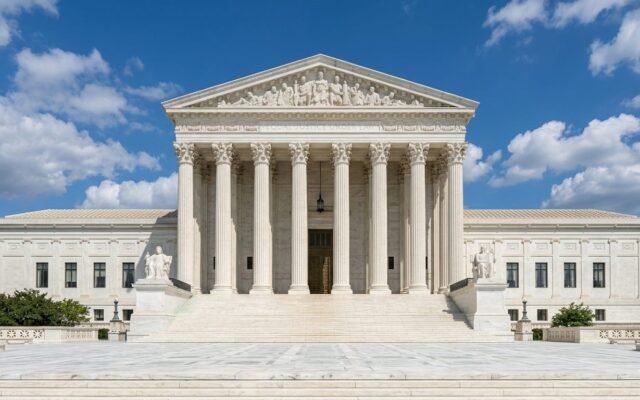
As only the second Hispanic named to the Court, her views on race and ethnicity have naturally been of great interest to Court watchers, litigators, and the so-called fourth estate. In fact, for a time her “wise Latina” comments and the president’s equally controversial “empathy standard” were unwelcome distractions and fodder for sharp criticism. But the threatened firestorm turned out to be more a tempest in a teapot, and during the Senate confirmation hearings she conducted herself with aplomb, charm, and dignity, demonstrating not just a nuanced and sophisticated comprehension of the law but a judicial demeanor and temperament to be expected of one enrobed in the marble edifice at the entrance of which bears the inscription “Equal Justice Under Law.”

At the age of 55, she could potentially serve until 2044, should she serve as long as Justice Oliver Wendell Holmes, Jr. (who served on the Court until the age of 90). Her relative youth, then, is one of the positive considerations that no doubt influenced her nomination.

Perhaps of somewhat lesser public interest, but of no less public importance, are Sotomayor’s views regarding the Constitution’s provisions generally and the safeguards concerning religious liberty specifically. Appellate judges exercise discretion in interpreting the U.S. Constitution, but are necessarily constrained by the binding precedent set by the U.S. Supreme Court. Since 1803 the judiciary has had final legal interpretive authority within our nation¹s system of government and the Supreme Court has reigned supreme over all courts regarding the laws of the land. As Chief Justice Marshall opined in Marbury v. Madison: “It is emphatically the province and duty of the Judicial Department to say what the law is.”

Three provisions in the U.S. Constitution expressly reference religion, effectively presenting a triptych showcasing the New World’s commitment to freedom of conscience. One is in Article VI, Section 3 of the U.S. Constitution, which provides in pertinent part that “. . . no religious test shall ever be required as a qualification to any office or public trust under the United States.” While age and residency requirements may be prescribed for would-be officeholders, this “no religious test” clause clearly proscribes any religious criterion being applied. (In some jurisdictions in colonial America public office holders had to be of the Protestant faith.)

The other two religion provisions are situated in the First Amendment: “Congress shall make no law respecting an establishment of religion, or prohibiting the free exercise thereof.” This pair of clauses (free exercise clause and establishment clause) proved fertile soil from which has grown the vast body of intricate, if not convoluted, case law concerning religious liberty.

While Sotomayor’s past judicial experience never afforded her the opportunity to opine on the Article VI, Section 3 prohibition against religious tests for officeholders, she has adjudicated cases pertaining to the other two provisions.

A quartet of cases gives voice to her views regarding the religion clauses. Ford v. McGinnis, for example, involved an inmate in a state correctional facility who requested to be served an Eid ul Fitr meal for observance of the Muslim Festival of Breaking the Fast. He wanted to participate in the daylong celebration at the conclusion of Ramadan, which is a holy month of fasting and prayer for Muslims. The prisoner had to be transferred from Rikers Island to the Downstate Correctional Facility for a court appearance on January 7, 2000, which was the very day for partaking of the Eid ul Fitr meal and so was unable to participate at the prescribed time.

Prison officials learned that most Muslims would not observe the feast at a time other than at the appointed time, and so they informed the inmate that no such makeup feast would take place given the generally accepted dictates of Islam. The prisoner in question begged to differ and filed a lawsuit.

The timing of the suit may not have been ideal for the litigant, who filed after the Religious Freedom Restoration Act had been invalidated by the Supreme Court (at least to the extent that it applied to the states) but before the Religious Land Use and Institutionalized Persons Act was passed by Congress. It afforded, however, the appellate court the occasion to decide the issue squarely on the Constitution, not on interpretations of federal statutes.

A federal trial court had affirmed the decision of the prison not to serve the meal at all since by conventional Muslim standards it would have been too late. By the time Sotomayor heard the case, she was a federal appellate judge serving on the Second Circuit. Writing for the panel, she opined that the appellate court would decline to assess the “objective reasonableness of the prisoner’s belief” and would ask rather the more focused and individualized questions of whether “a claimant sincerely holds a particular belief and whether the belief is religious in nature.”

This was because judges, though learned in the law, did not have the “aptitude to pass upon the question of whether particular religious beliefs are wrong or right.” The decision served a didactic purpose, signaling that courts would look to the sincerely held beliefs of the individual adherent party to the litigation, not solely to whether the belief was an official creed or a “tenet or dogma of an established religious sect.” No group would determine for the individual what the individual in question believed.

Not a favorite of correctional facility wardens, the case made clear that the Constitution’s guarantees afforded substantive rights, not easily dismissed, and certainly not diminished due to the idiosyncratic religious beliefs of the individual asserting the rights.

The case of Flamer v. City of  White Plains was a suit by Rabbi Reuven Flamer, a Hasidic Lubavitcher Jew, who requested to erect a menorah, a nine-pronged candelabrum, in a city park. He was precluded from so doing by a city council resolution, supported by Reform Jews, prohibiting fixed outdoor displays of religious or political symbols in government parks. The rabbi asserted his constitutional rights to free exercise of religion and to free speech and argued that the city resolution was unconstitutional.

Sotomayor, then serving as a federal trial judge, struck down the resolution as an unconstitutional content-based regulation of speech. A hybrid case involving two First Amendment protections (speech and religion), Flamer is seen as a victory for proponents of unfettered religious speech. Why should religious speech be accorded less protection than secular speech? After all, freedom of religion is expressly protected and, therefore, religious speech should for that very reason be accorded more, rather than less, protection.

At the same time, however, there are those of a sincerely religious orientation who equally revere the Constitution who are less than completely comfortable with the decision. For them, the Constitution precludes use of government property for such religious expression. The establishment clause is not just about disestablishing churches but about preventing the perception of government endorsement of a particular faith. The case is not just a skirmish between conservative Hasidic Lubavitcher Jews and progressive Reform Jews; it also reveals the inherent tensions between the establishment clause and free exercise clause.

Judge Sotomayor, with the deft hand of a judicial maven, identified the relevant facts and applied the legal precedent. After describing the distinctions between a traditional public forum, a nonpublic forum, and a designated public forum, she permitted the expressive action of erecting the menorah, vindicating the right to religious speech in a forum in which no one would mistake the menorah for government speech. No doubt the case would have been decided the same way whether the display entailed the Ten Commandments, a crescent, or a crèche.

Campos v. Coughlin is a third case that can serve as a window on Sotomayor¹s approach to religious freedom issues. Campos also involved incarcerated individuals, self-described adherents of the Santeria religion, though some had previously identified themselves as Christians. What makes this case interesting was not just that the believers were prisoners or that they insisted that they had a right to wear multiple strands of beads; it is important because while such a devotional practice may have been officially optional for Santeria practitioners, it was not optional to the petitioners in question. If the state denied their request for accommodation, the denial could, in their minds, “result in negative and possibly irreversible life consequences for the practitioner.”

In deciding the case Judge Sotomayor upheld their claim, holding that an accommodation was constitutionally required. State corrections administrators, while ever mindful of prison safety and security concerns, were no less responsible as government actors for complying with the constitutional right to the free exercise of religion. The right is not absolute and admits of caveats, qualifications, and limitations. But on balance the religious freedoms guaranteed to the prisoners outweighed concerns that the beads might identify prison gang membership (a genuine, nontrivial concern of the warden).

Hankins v. Lyght was a case in which an elderly Protestant minister filed suit against his denomination’s implementation of mandatory age-based retirement. Though he loved his church, he hated what in his mind was its thinly veiled ageism. In this case Judge Sotomayor parted company with the majority and filed a dissent.

She argued that the federal age discrimination in employment statute was inapplicable to a church’s hiring, retention, and employment practices, for to hold otherwise would unduly intrude into matters (of faith) regarding which courts had no competence. Court involvement in a church¹s mandatory retirement dispute would be to trespass on “spiritually intimate grounds of a religious community’s existence.”

With due deference to applicable precedent, she explained her reasons for dissenting. One might infer from her dissenting opinion a profound respect for religious institutions and their faith-informed internal operations. The right to believe belongs not just to an individual but to an aggregate of individuals, and government should studiously avoid becoming embroiled in internecine struggles over religious questions between believers and their communities.

These four cases stand for the constancy of the Constitution. They reveal Sotomayor’s judicial leitmotif of upholding constitutional rights not just in trouble-free circumstances but even under challenging conditions. The Constitution guides the ship of state not just in tranquil waters but even, and perhaps especially, in the Sturm und Drang of the perfect legal storm.

While it might be an exaggeration to call her opinions illuminating, learned, and lucid, it’s not much of an exaggeration. Her published opinions exhibit the painstaking and proficient habits of a judge who is fairly even-tempered, passionate about being dispassionate, and decidedly mainstream. She is not, at least on the religion clauses, an ideologue with a doctrinal ax to grind. Her opinions avoid courting the avant-garde; instead, they are closely reasoned and meticulously written with the fidelity to statutes and studious attention to precedent expected of a neutral adjudicator. Noncontroversial is an apt description of her judicial oeuvre‹and perhaps this is precisely what the president wanted.

These are not the only opinions that evince recently confirmed Justice Sotomayor’s religious liberty jurisprudence. Professor Howard M. Friedman has compiled an extensive list of Sotomayor’s rulings on religion clause issues at his blog, Religion Clause.

Some groups criticize Sotomayor’s jurisprudence as being merely comme ci, comme ça (so-so) or rather moderately tolerable. Others find her to be―for good or for ill―a rather “strict church-state separationist.” Still others laud her as a brilliant jurist.

According to the Baptist Joint Committee for Religious Liberty, an organization noted for its strict church-state separation, Sotomayor upholds religious “free exercise―even in difficult settings such as prisons and in cases where the religious practices of plaintiffs are unfamiliar,” and “where the governing case law was not settled, she accurately predicted the Supreme Court’s eventual resolution.”

Dan Gilgoff, writing in his God & Country blog for U.S. News and World Report, found Sotomayor’s religion clause cases so middle-of-the-road that he predicted the White House might even focus on them to garner support among religious conservatives.

The American Center for Law and Justice, a traditional values counterpart to the liberal ACLU, doubtless would have preferred a nominee more in the conservative mold of Justice Scalia. But its decision not to actively oppose Sotomayor’s confirmation and to rather generically indicate that it “stands firmly behind the appointment of judges who will interpret the law, rather than legislate policy” is telling.

While the U.S. Senate fully inquired into Sotomayor’s judicial philosophy, one thing it properly declined to do was inquire into “her own religious faith.” While it is common knowledge that she is a practicing Catholic Christian (and will constitute the sixth Catholic on the nine-member Court), her prayers, devotional practices, and personal theology are not pertinent to her qualifications for the U.S. Supreme Court. Such a line of questioning could be tantamount to a violation of the “no religious test” provision of the Constitution.

In conclusion, if Justice Sotomayor’s past writings are any indication, her future religion clause opinions should please First Amendment advocates, especially those for whom religious liberty is vital.
 

David A. Pendleton, a former legislator, adjudicates workers compensation appeals in Honolulu, Hawaii.

 Although ReligiousLiberty.TV is not affiliated with Liberty Magazine, we strongly support the magazine and are pleased that the magazine and the author have granted us permission to repost this informative article about the views of the newest Justice on the United States Supreme Court on the intersection of church and state.  If you enjoy this article, please consider subscribing (it is only $7.95 a year) or contributing to further the mission of the magazine.  RLTV Editor

Pastor Boissoin’s Lawyer: Case Will Positively Impact Religious Freedom in Canada (LifeSiteNews)

From http://www.lifesitenews.com/ldn/2009/dec/09120706.html

EXCERPT:

CALGARY, December 7, 2009 (LifeSiteNews.com) – Gerald Chipeur, the lawyer who represented Pastor Stephen Boissoin, has said that the recent ruling in favor of Mr. Boissoin “will have a significant long term positive impact on religious freedom in Canada.”

Pastor Boissoin was exonerated by a Court of Queen’s Bench judge last week after being subjected to the proceedings of the Alberta Human Rights Tribunal for over seven years. The Tribunal had found Boissoin guilty of “hate speech” for having written a letter to the editor of a local newspaper about the homosexualist agenda.

But Justice Earl C. Wilson last week ruled the letter Mr. Boissoin wrote to the editor of the Red Deer Advocate on June 17, 2002 on the subject of homosexual-rights curricula in the province’s educational system was not a hate crime but legitimate expression allowed under freedom of speech.

“The decision of Justice Earl Wilson of the Court of Queen’s Bench in Boissoin v Lund will have a significant long term positive impact on religious freedom in Canada,” Gerald Chipeur wrote in a summary analysis of the judgment, forwarded to LifeSiteNews.com by Boissoin.

Chipeur states that the bar has been raised substantially on what may in the future be construed as a violation of the “hate” provisions of human rights laws. “The decision established a very high threshold for the conclusion that a publication is in violation of the ‘hate’ provisions of Alberta’s human rights laws,” he said.

Read the full piece at http://www.lifesitenews.com/ldn/2009/dec/09120706.html

Germany: Rigid Sunday law used against Scientology which is considered “business” by gov’t. (Der Spiegel)

GERMANY – Scientologists have had a particularly difficult time in Europe where many view them as a nuisance for their recruiting activities.  When they opened a new 43,000 square foot facility near Berlin, the locals complained. However, the city found a loophole based on a 1995 Federal Labor Court ruling that found that Scientology is “neither a religion nor an ideology” and is therefore a business. 

EXCERPT:


According to the Berlin daily Der Tagesspiegel, a Berlin city official said at a neighborhood meeting on Wednesday that the city had reviewed existing laws and determined there was nothing they could do to prevent the center’s marketing activities.

“In our view, this is a business activity,” Marc Schulte, the city district’s economic advisor, told the paper.

 But this also means that business restrictions apply to Scientology, including the federal law banning sales on Sunday. Any normal church is free to sell postcards, books or any other educational or fundraising goods on that day, but the Church of Scientology will be banned from offering courses or selling any goods on Sundays. City officials have said they will strictly observe the Scientologists to make sure they follow the rule of law.


Read the full article at http://www.spiegel.de/international/0,1518,462439,00.html

Next Page »