Gendercide: China’s shameful massacre of unborn girls means there will soon be 30m more men than women (Daily Mail)
EXCERPT:
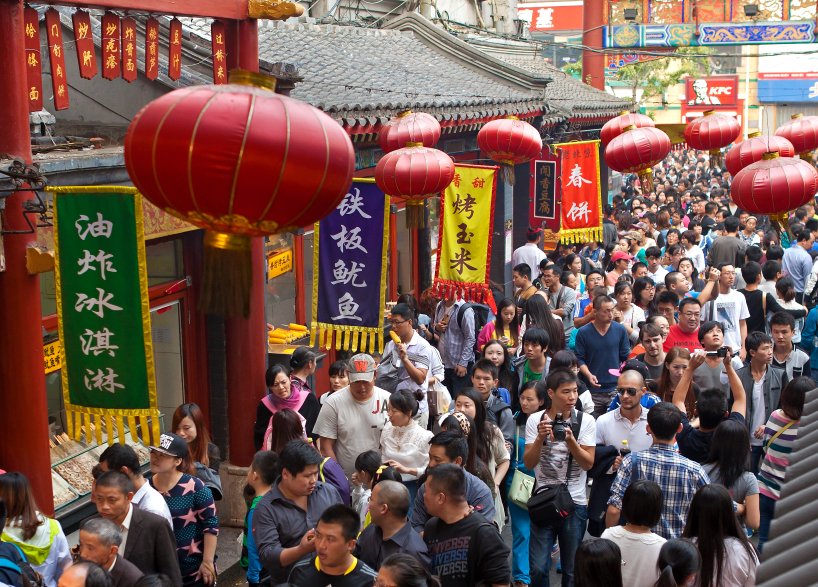
By the year 2020, there will be 30 million more men than women of marriageable age in this giant empire, so large and so different (its current population is 1,336,410,000) that it often feels more like a separate planet than just another country. Nothing like this has ever happened to any civilisation before.
The nearest we can come to it is the sad shortage of men after the First World War in Britain, France, Russia and Germany, and the many women denied the chance of family life and motherhood as a result.
…
The Chinese state, never having intended this result and increasingly alarmed by it, is now using all its huge propaganda resources to try to stop the slaughter of unborn girls.
But it will be hard to fight against the cold hard prejudice in favour of sons and against daughters, rooted in a prehistoric belief that sons will care for their aged parents while daughters will cost money in dowries, and desert to the families into which they marry.
Sec. Clinton condemns “Religious Defamation” laws and addresses international issues in annual Religious Freedom Report
On October 25, 2009, U.S. Secretary of State Hillary Clinton presented the annual International Religious Freedom Report, on behalf of the U.S. State Department Bureau of Democracy, Human Rights, and Labor. In the first IRFR from the Obama administration, Clinton stated her opposition to international laws that would propose to protect religious liberty by preventing negative speech about religious viewpoints.
In her speech, available online at C-SPAN, Secretary Clinton said:
[O]ur country has been strengthened by its long tradition of religious pluralism. From the largest denominations to the very smallest congregations, American religious bodies and faith-based organizations have helped to create a more just and compassionate society. Now, some claim that the best way to protect the freedom of religion is to implement so-called anti-defamation policies that would restrict freedom of expression and the freedom of religion. I strongly disagree. The United States will always seek to counter negative stereotypes of individuals based on their religion and will stand against discrimination and persecution.
But an individual’s ability to practice his or her religion has no bearing on others’ freedom of speech. The protection of speech about religion is particularly important since persons of different faiths will inevitably hold divergent views on religious questions. These differences should be met with tolerance, not with the suppression of discourse.
Clinton also addressed the status of religious freedom around the world and described several initiatives designed to promote interfaith dialogue and understanding.
In the Executive Summary of the report, available at the State Department web site, the Bureau describes international efforts, focusing on the efforts of the Vatican to engage Islam. The Summary mentions that there is no “country report” for the Vatican which enjoys national sovereignty.
“The Holy See has taken a leading role in recent engagement with Islam, accompanied by growing interest from diverse religious groups and regions. . . . The Holy See favors a dialogue that will lead to greater religious freedom and tolerance for differences. In the letter exchange between Prince Talal and the Vatican, analysts have noted references from both sides to longstanding areas of concern, such as respect for the dignity of every human person and respect for religious freedom, often expressed in terms of “reciprocity.” Other areas of concern include educating the public on the essential elements of both religions, sharing religious experience, and promoting mutual respect instead of violence, especially among the young.”
The report also outlines progress toward religious reconciliation within countries. such as India which recently experienced violence between religious groups, the Ukraine, and several other nations.
There are several nations with severe religious liberty situations (designated as Countries of Particular Concern, or CPCs) including Burma which is currently under U.S. sanction for human rights abuses, China with which the U.S. has a complicated relationship due to a combination of ongoing human rights abuses and trade, Eritrea, North Korea, Saudi Arabia, Sudan, and Uzbekistan. The report outlines specific concerns about these countries and others.
###
Barack Obama on Religious Tolerance and Persecution
Full Transcript: Saddleback Presidential Forum, Sen. Barack Obama, John McCain; Moderated by Rick Warren
Aired August 16, 2008 – 20:00 ET
WARREN: Religious persecution, what do you think the U.S. should do to end religious persecution, for instance, in China, in Iraq, and in many of our supposed allies? I’m not just talking about persecution of Christianity, but there’s religious persecution around the world that persecutes millions of people.
OBAMA: Well, I think the first thing we have to do is to bear witness and speak out, and not pretend that it’s not taking place. You know, our relationship with China, for example, is a very complicated one. You know, we’re trading partners. Unfortunately, they are now lenders to us because we haven’t been taking care of our economy the way we need to be. I don’t think any of us want to see military conflict with China.
So we want to manage this relationship and move them into the world community as a full partner, but we can’t purchase that by ignoring the very real prosecutions, persecutions that are taking place, and so having an administration that is speaking out, joining in international forums, where we can point out human rights abuses, and the absence of religious freedom, that, I think, is absolutely critical. Over time, what we are doing is setting up new norms and creating a universal principle that people’s faith and people’s beliefs have to be protected.
Over time, what we are doing is setting up new norms and creating a universal principle that people’s faith and people’s beliefs have to be protected.
And as you said, it’s not just Christians, and we’ve got to make sure, you know, one thing I think is very important for us to do on all of these issues is to lead by example. That’s why I think it’s so important for us to have religious tolerance here in the United States. That’s why it’s so important for us, when we are criticizing other countries about rule of law to make sure that we’re abiding by rule of law, and habeas corpus, and we’re not engaging in torture, because that gives us a moral standing to talk about these other issues.
Barack Obama on Religious Tolerance and Persecution
Full Transcript: Saddleback Presidential Forum, Sen. Barack Obama, John McCain; Moderated by Rick Warren
Aired August 16, 2008 – 20:00 ET
WARREN: Religious persecution, what do you think the U.S. should do to end religious persecution, for instance, in China, in Iraq, and in many of our supposed allies? I’m not just talking about persecution of Christianity, but there’s religious persecution around the world that persecutes millions of people.
OBAMA: Well, I think the first thing we have to do is to bear witness and speak out, and not pretend that it’s not taking place. You know, our relationship with China, for example, is a very complicated one. You know, we’re trading partners. Unfortunately, they are now lenders to us because we haven’t been taking care of our economy the way we need to be. I don’t think any of us want to see military conflict with China.
So we want to manage this relationship and move them into the world community as a full partner, but we can’t purchase that by ignoring the very real prosecutions, persecutions that are taking place, and so having an administration that is speaking out, joining in international forums, where we can point out human rights abuses, and the absence of religious freedom, that, I think, is absolutely critical. Over time, what we are doing is setting up new norms and creating a universal principle that people’s faith and people’s beliefs have to be protected.
Over time, what we are doing is setting up new norms and creating a universal principle that people’s faith and people’s beliefs have to be protected.
And as you said, it’s not just Christians, and we’ve got to make sure, you know, one thing I think is very important for us to do on all of these issues is to lead by example. That’s why I think it’s so important for us to have religious tolerance here in the United States. That’s why it’s so important for us, when we are criticizing other countries about rule of law to make sure that we’re abiding by rule of law, and habeas corpus, and we’re not engaging in torture, because that gives us a moral standing to talk about these other issues.
ECONOMY: Chinese government paper urges new world order for economy…
China is heavily invested in the United States, and is nervous about what has been happening on Wall Street. Here are some excerpts from: http://www.reuters.com/article/ousiv/idUSPEK4365020080917?sp=true
—
BEIJING (Reuters) – Threatened by a “financial tsunami,” the world must consider building a financial order no longer dependent on the United States, a leading Chinese state newspaper said on Wednesday.
…
Its pronouncements do not necessarily directly reflect leadership views, but this commentary by a professor at Shanghai’s Tongji University suggested considerable official alarm at the strains buckling world financial markets.
…
“The world urgently needs to create a diversified currency and financial system and fair and just financial order that is not dependent on the United States.”
But Vice Premier Wang Qishan, on a visit to the United States, told U.S. trade officials in a meeting on Tuesday that China and the United States needed to maintain close economic ties with global markets going through such turbulence.
“The Chinese government is well aware of the fact that the United States, which is the world’s largest developed country, and China, which is the world’s largest developing country, should have constructive and cooperative economic and trade relations,” he said.
China is a major buyer of U.S. Treasury bonds, and through its sovereign wealth fund it has taken stakes in two large U.S. financial institutions.
…
Read more at http://www.reuters.com/article/ousiv/idUSPEK4365020080917?sp=true
—
VIDEO: God in China – The Struggle for Religious Freedom
This was recently posted on YouTube, and we are linking all 6 parts below. The description is as follows:
“While China’s leadership has shown a willingness to abandon, gradually, its anti-religious bias, this freedom has its limits. The regime still tries to micromanage religion. Citizens who shun state-sanctioned religious institutions in favour of “underground” churches do so at great personal risk. How the government deals with God in China will reveal whether the country is finally ready for democracy. In this hour-long documentary, produced for Italy’s RomeReports News Agency, Chinese men and women speak candidly of their experiences as religious believers, and their assessment of what the future may hold for them. The film presents interviews with representatives of both official and underground religions, shows priests and seminarians practicing their faith in secret, and offers a rare glimpse into China’s Muslim community.”
1 of 6
2 of 6
3 of 6
4 of 6
5 of 6
6 of 6
Olympics: China Bans Foreign Chaplains – only “official” chaplains allowed (Houston Chronicle)
Because China is a major trade partner with the United States, it can be easy to forget that religious freedom in China is marginal even when China is trying to put its best foot forward.
This is from the The Houston Chronicle via Bill Cork’s website, Oak Leaves.
“Previous Olympic hosts welcomed foreign chaplains, but China has banned them from living with the athletes. It has instead pledged that it will provide equivalent services from its pool of state-employed pastors, imams and other clerics.”
. . .
“China’s ruling Communist Party is suspicious of any cause that could compete with its authority, including organized religion. Officially, the party allows worship only at registered churches belonging to a state-controlled organization; nonregistered places of worship are closely monitored. The party also bans foreign chaplains’ holding services without government permission or proselytizing on Chinese soil.”
. . .
“As Americans, we believe in having our free will to do as we please and express our views,” McAdams said. “It has been a little awkward, but we are in a communist country, and that is the way things are done.”
Read the full article at The Houston Chronicle.
Bush to attend church in China, urge religious freedom (AFP)
EXCERPTS FROM: http://afp.google.com/article/ALeqM5jTCaQ-QMoHDqK5mk7ao7ryoZGzMw
WASHINGTON (AFP) — US President George W. Bush plans to attend church while in China for the opening of the Olympic Games next month, and will speak about freedom of religion, a top aide said Wednesday.
“When he goes to church on Sunday (August 10) he will make a statement afterwards in which he discusses his view on religious freedom in China,” said national security council director of Asian Affairs Dennis Wilder.
…
Bush, a devout Christian, has walked a diplomatic tightrope over the Olympics, repeatedly insisting the games are not a political venue while recently stepping up his public criticism of Beijing’s rights record.
…
“What we are looking for in China is not gestures, we are looking for structural change, we are looking for long term change,” Wilder said.
“We are looking for the Chinese at these games to show that they are making progress, to demonstrate to the world, the spotlight is on Beijing, this is an opportunity for Beijing to show that it is widening … freedom of press, freedom of expression,” he said.
…
Asked about China’s failure to release political prisoners as a goodwill gesture ahead of the Games, Wilder said: “Obviously I would like to see all these political prisoners that we have on our lists released.
“We have handed the Chinese lists of people that we think are unfairly in prison.”
Bush Calls for Religious Freedom in China, Iran (Voice of America)
White House 14 July 2008 |
U.S. President George Bush says he will continue to press for greater religious freedom in his meetings with world leaders – including those in China. VOA’s Paula Wolfson reports Mr. Bush spoke at a ceremony marking the 10th anniversary of legislation designed to promote religious freedom around the world.
![]() |
| George W. Bush makes a statement in Rose Garden of White House, 14 Jul 2008 |
The president says in too many countries, too many people lack the right to worship as they please.
“Our thoughts turn especially to countries where religious freedom is of particular concern,” said President Bush. “Some of these nations have taken steps toward reform. Others have not.”
In remarks on the 10th anniversary of the International Religious Freedom Act, the president made specific mention of Iran, Eritrea, Sudan, North Korea, Burma, Uzbekistan and Saudi Arabia. But his most detailed remarks concerned the treatment of those seeking religious freedom in China.
Mr. Bush spoke about his recent meeting in Washington with a Chinese human-rights lawyer named Li Baiguang who is a devout Protestant.
“For his work he has been repeatedly jailed and attacked,” he said. “A few months ago, he was scheduled to meet with members of Congress. State authorities blocked the meeting and detained Li on the outskirts of Beijing.”
President Bush said he has brought up the need for greater religious freedom in China in past meetings with Chinese President Hu Jintao. He has indicated he plans to do so again when he travels to Beijing next month for the opening of the summer Olympic games.
“Wherever and whenever I meet leaders, I am going to constantly remind them they ought to welcome religion in their society, not fear it,” said Mr. Bush.
Mr. Bush made his comments to a small audience made up largely of members of Congress who pushed the International Religious Freedom Act through the legislature in 1998. Among other things, it set up a U.S. commission to monitor religious rights around the world, established the position of an ambassador for religious freedom, and authorized the use of sanctions against nations that deny their people the right to worship as they see fit.
http://voanews.com/english/2008-07-14-voa61.cfm
Used with permission pursuant to VOA Terms of Service.
China Responds: “China reject’s Bush’s ‘religious freedom’ remarks” and asks him to stop “interfering” in internal affairs (Xinhuanet)
BEIJING, July 16 (Xinhua) — Chinese Foreign Ministry spokesman Liu Jianchao on Wednesday rejected U.S. President George W. Bush’s remarks concerning religion freedom in China, urging the United States to view China’s religious condition with a just and objective attitude.
“China is a country under the rule of law, and the Chinese government protects its citizens’ freedom of religious belief according to law, and Chinese citizens enjoy full freedom of religious belief protected by law,” Liu said.
…
“Meanwhile, what needs to be stressed is that people are all equals in the eyes of the law. Anyone’s speech or behavior should not violate the country’s law nor imperil the state security and social stability,” Liu said.
Read more at http://news.xinhuanet.com/english/2008-07/16/content_8557004.htm